
Kota Warisan Perai Offers Nature-and Community-Based Tourism Experiences
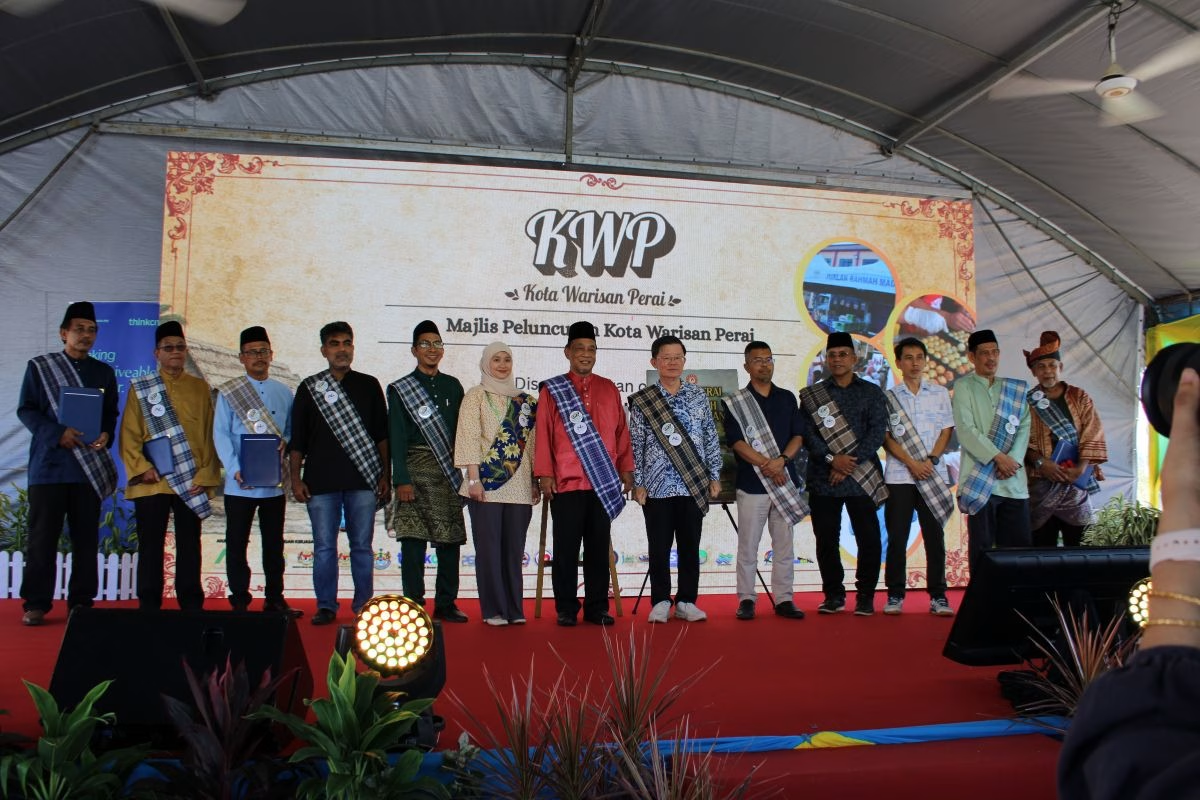
SEBERANG PERAI, 8 February 2026 – In conjunction with Visit Malaysia 2026, Kota Warisan Perai has been introduced as a community -led initiative that diversifies Penang’s tourism offerings by showcasing Seberang Perai’s natural environment, heritage, and everyday village life. The project was officiated today by YAB Tuan Chow Kon Yeow, Chief Minister of Penang.
The initiative seeks to strengthen the historical identity of traditional villages along the Perai River while stimulating local economic activity through eco -tourism and community -based tourism experiences. Kota Warisan Perai is designed to offer meaningful experiences for both domestic and international visitors, presenting an alternative to Penang’s established tourism destination at the George Town UNESCO World Heritage Site.
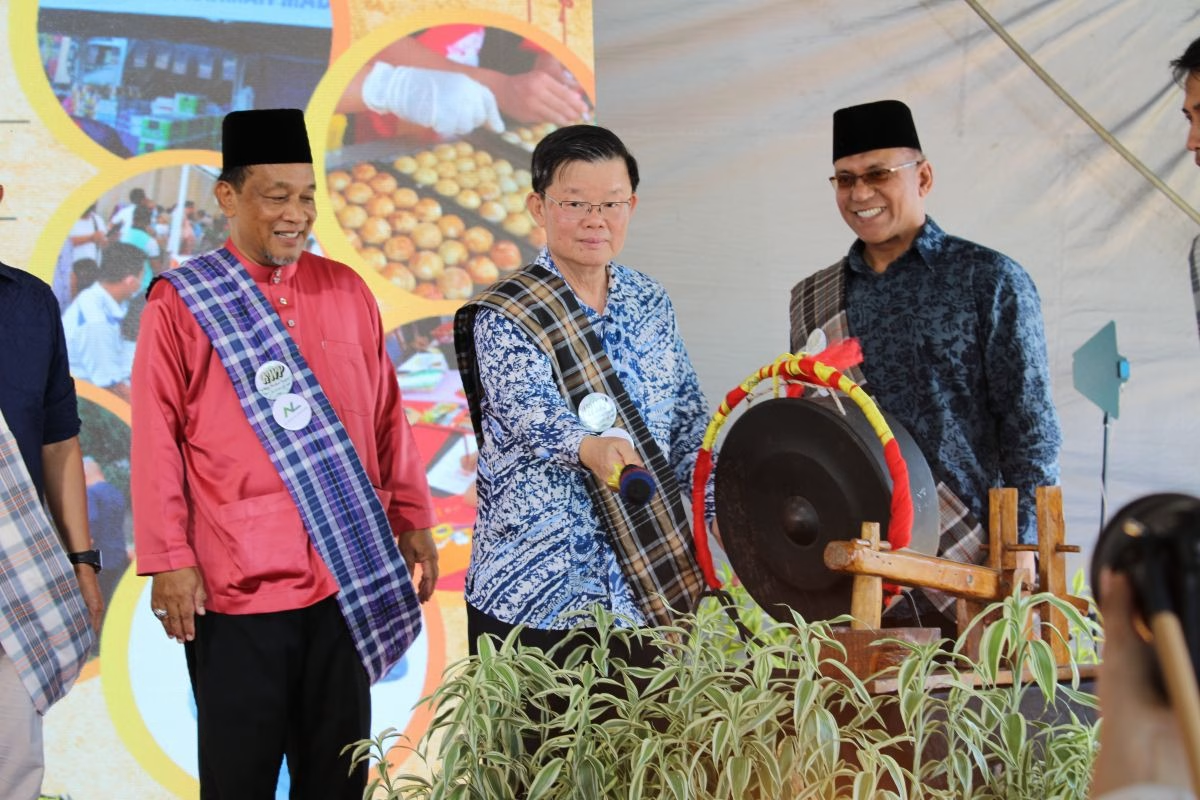
“Seberang Perai plays an important role in Penang’s tourism landscape, with its natural environment, history , and communities forming part of the state’s identity. Initiatives such as Kota Warisan Perai help advance a more balanced and inclusive approach to tourism, while delivering tangible benefits to local communities ,”said Chow Kon Yeow.
The project is supported through the Seberang Perai Small Towns Grant s Programme under the Levelling Up Seberang Perai (LUSP) Programme, implemented by Think City with support from the Ministry of Finance Malaysia, the Penang State Government, the Seberang Perai City Council, and partner NL Travel & Tours. The Kota Warisan Perai project is delivered in close collaboration with local communities, as well as strategic partners from universities, associations, and government agencies.
“Kota Warisan Perai represents an initial step in exploring how the Perai River can function as an economic, ecological, and social backbone for Seberang Perai. It offers an early glimpse into Think City’s approach to developing Eco Precincts in the next phase of LUSP, beginning with strong community participation,” said Hamdan Abdul Majeed, Managing Director of Think City.
The Kota Warisan Perai project focuses on reviving Perai’s local history and heritage, conserving the river ecosystem and its surrounding environment , and developing Muslim -friendly tourism and hospitality (MFTH) offerings that generate direct economic benefits for local communities . Activities being explored include mangrove tours, community farming, village stays, and heritage storytelling.

The project involves five villages —Kampung Labuh Banting, Kampung Kota, Kampung Pengkalan Machang, Kampung Terus, and Kampung Air Hitam Dalam —which share the Perai River as a historical lifeline shaping early settlement patterns and local economic activity . The Perai River has also previously served as the setting for community activities such as Pesta Sungai, which brought together villages along the river corridor.
“Through this project, we are not only highlighting the stories and heritage of the village but also creating new opportunities for local residents to become community -based tourism operators. At the same time, this initiative aims to strengthen and further develop Muslim -friendly tourism in the Seberang Perai area ,” said Dato’ Sr. Dr. Muhamad Farid Saad, Chairman of NL Group of Companies .
The initiative also places emphasis on knowledge transfer and nurturing interest among younger generations through community education programmes, guided tours, and heritage storytelling. At the same time, Kota Warisan Perai spurs economic expansion for local entrepreneurs, artisans, traditional food producers, and community tour guides.
In addition to on -the-ground activities, 12 tourism publications and audiovisual content have been developed by recipients of the Seberang Perai Small Towns Grants to promote the ecological, cultural, and community assets of Seberang Perai to a wider audience , including a mini documentary on Seberang Perai Utara screened during the launch event.
The launch of Kota Warisan Perai today marks an important step in highlighting Seberang Perai’s natural and cultural assets, expanding eco – and heritage -based tourism narratives, and reinforcing the area’s identity as a community -led tourism destination.
About The Author




Leave a Reply