
AYANA Komodo Waecicu Beach Deepens Commitment to Ocean Conservation
Singapore (13 June 2025) – Since opening in September 2018, AYANA Komodo Waecicu Beach has placed a strong focus on preserving the natural beauty of its surroundings at the gateway to the UNESCO-listed Komodo National Park. From day one, the resort has integrated marine conservation into its operations through its Marine Discovery Center, launched as part of the broader AYANA Cares sustainability initiative. The center was established to promote ocean education and coral reef conservation — key priorities in one of the world’s most biodiverse marine ecosystems.
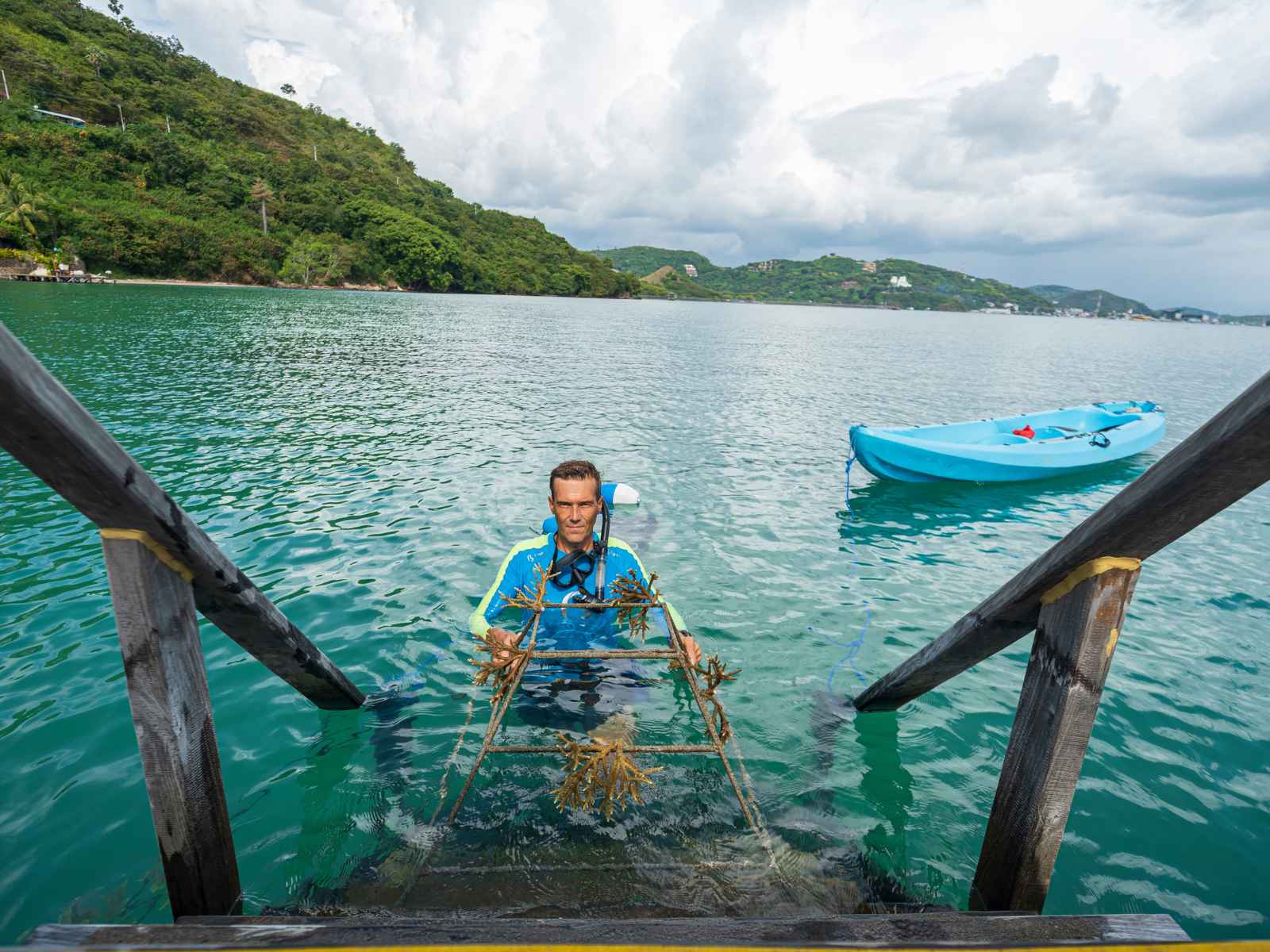
Led by resident marine biologist Lee Miles, who has a strong background in coral reef restoration and marine ecosystem management, the Marine Discovery Center raises awareness of ocean conservation issues through interactive exhibits, snorkeling excursions, and hands-on coral planting experiences. “At AYANA Komodo Waecicu Beach, we believe everyone can contribute to environmental protection,” says Miles. “Our goal is to engage and inspire guests and local youth to become active stewards of the ocean.”
At the heart of AYANA Komodo’s conservation work is a growing coral restoration program, covering 2,250 square meters of reef. So far, 325 square meters of coral have been outplanted (the process of transplanting coral fragments that were grown in nurseries back onto natural reef areas) using a variety of techniques.
These include coral gardening, where coral fragments are grown in rope nurseries and nursery racks before being replanted onto the reef after approximately 12 months. For areas lacking natural substrate (a surface or material on the seafloor where organisms such as corals can attach and grow), artificial structures including frames, bottle reef units, concrete slabs, and fish domes are used to create new habitats and increase marine biodiversity.
AYANA also practices a low-impact, organic coral restoration method, using cotton ropes and wooden stakes arranged in underwater grids. Corals planted by guests during interactive sessions gradually self-attach over two to three years, creating vibrant new reef sections. Currently, 160 square meters of coral have been restored using this method. These efforts have transformed the target reef areas into a thriving marine habitat, now home to more than 120 recorded fish species around the resort’s jetty and lagoon.
Education and outreach
Conservation also extends beyond the reef, with a focus on education and outreach in the local community. As part of its commitment to nurturing future ocean advocates, AYANA invites local schoolchildren to take part in Marine Life Workshops and coral planting activities. To date, around 80 local young people have participated in these programs, gaining hands-on experience in marine conservation and a deeper understanding of the importance of protecting their natural environment.
In support of Komodo National Park, AYANA has also supplied over 100 naturalist guides and rangers with essential gear and field supplies.
Together, these initiatives reflect AYANA’s long-term vision: to protect, restore, and celebrate the extraordinary marine ecosystems of Labuan Bajo — while inspiring all who visit to do the same.
Q&A with Marine Discovery Center’s Marine Biologist Lee Miles
Q: What brought you to AYANA Komodo Waecicu Beach, and what does your role as in-house Marine Biologist involve?
A: My academic background is in restoration ecology. For several years, I worked in the UK as a consultant ecologist. In 2009, I left the UK to become a scuba diving instructor. This job took me to many exotic locations, including the Maldives where I worked as a marine biologist and diving instructor. This allowed me to combine both my academic training and passion for marine conservation. In 2009, I had already visited Labuan Bajo and Komodo National Park as a tourist, fulfilling a lifelong goal to see Komodo Dragons in the wild and to dive in the Komodo National Park. In 2020, I was lucky enough to have the chance to work here as the AYANA Komodo Resort in-house ecologist. In this role, I am responsible for leading environmental initiatives and providing educational opportunities for guests.
Q: What does a typical day for the AYANA Komodo Waecicu Beach’s in-house Marine Biologist look like?
A: Normally, my mornings are occupied with guest activities such as coral planting and accompanying guests on our Lako Taka Glass Bottom Boat trip. Afternoons are spent working on our coral reef restoration projects, as well as training my local Assistant Marine Biologists.
Q: How are coral reefs important to the ocean ecosystem and what are the potential benefits for humans from the livelihood of coral?
A: Coral reefs occupy less than 0.1% of the ocean surface, yet they contain 25% of all marine species. Therefore, they are an essential part of a healthy ocean. Humans benefit from coral reefs in terms of tourism and the economic benefits that they provide. Many local people rely on coral reefs for fishing and making a living to support their families. Coral reefs also protect tropical coastlines from the power of the ocean by acting as a natural barrier, absorbing wave energy and thereby protecting valuable coastal infrastructure.
Q: What will be the long-term effect of the current coral planting initiatives?
A: The primary goals of our coral restoration project are to increase ecosystem function and habitat complexity within our managed coral reef areas. By restoring areas of degraded coral reef, we are bringing marine life back into these areas, by increasing coral cover and boosting invertebrate and fish numbers. This will also benefit areas outside of our managed reef, as many of our shallow reef areas in the lagoon act as nurseries for many species of coral reef fish. This will therefore provide new recruits for coral reefs within the local area.
About The Author





Leave a Reply